
Aspire

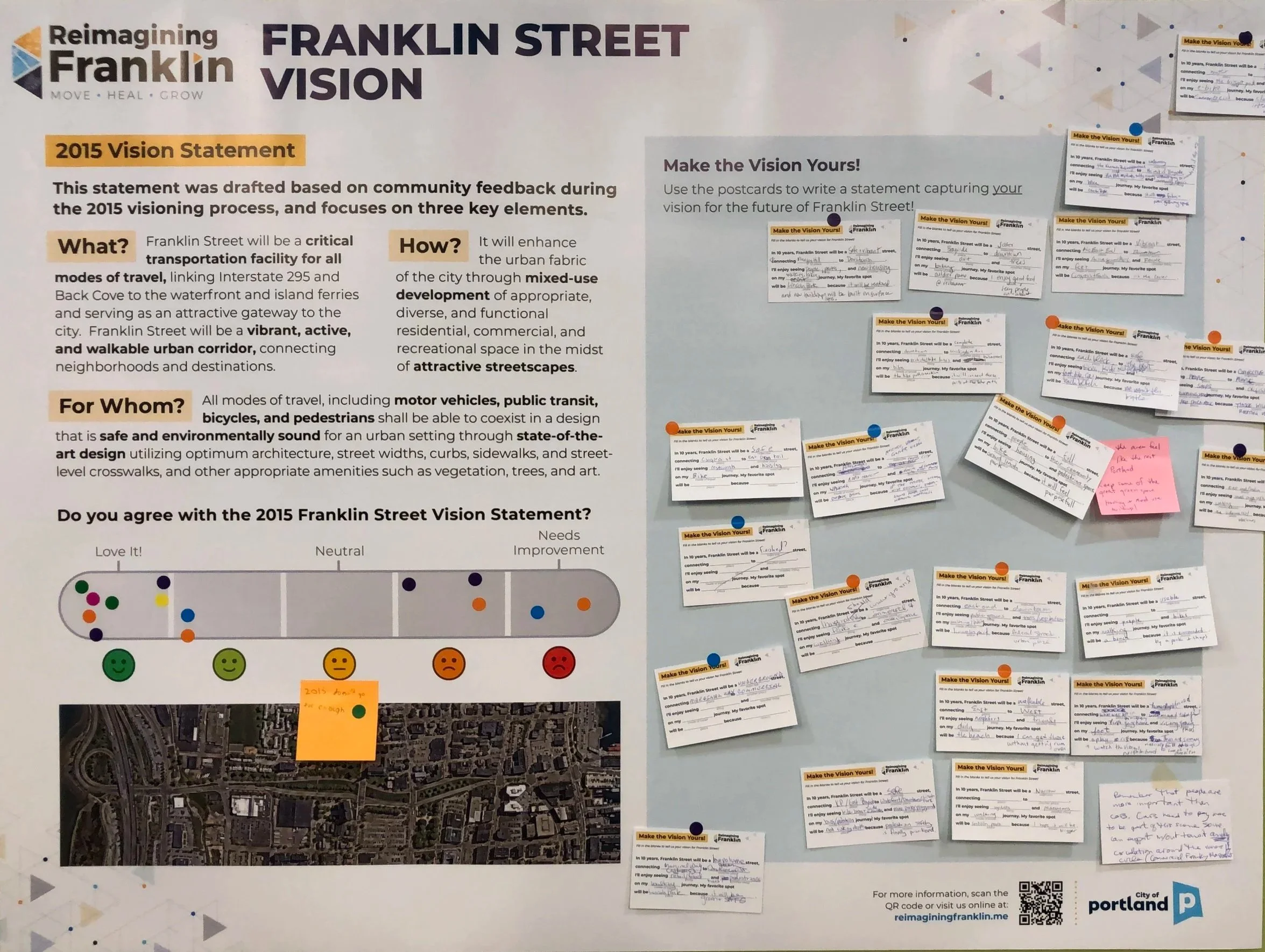
Reimagining Franklin Street began with a review of the vision and goals from the 2015 Franklin Street Feasibility Study. Since 2015, significant change has occurred within the City of Portland, and during the aspire phase of the work, the vision and goals were updated to reflect the current context.
The updated vision, goals and objectives for Reimagining Franklin Street are based on not only the previous work under the Franklin Street Feasibility Study, but also on current public engagement and City of Portland policy. Let us know if you have comments or additional suggestions on the draft vision, goals and objectives.
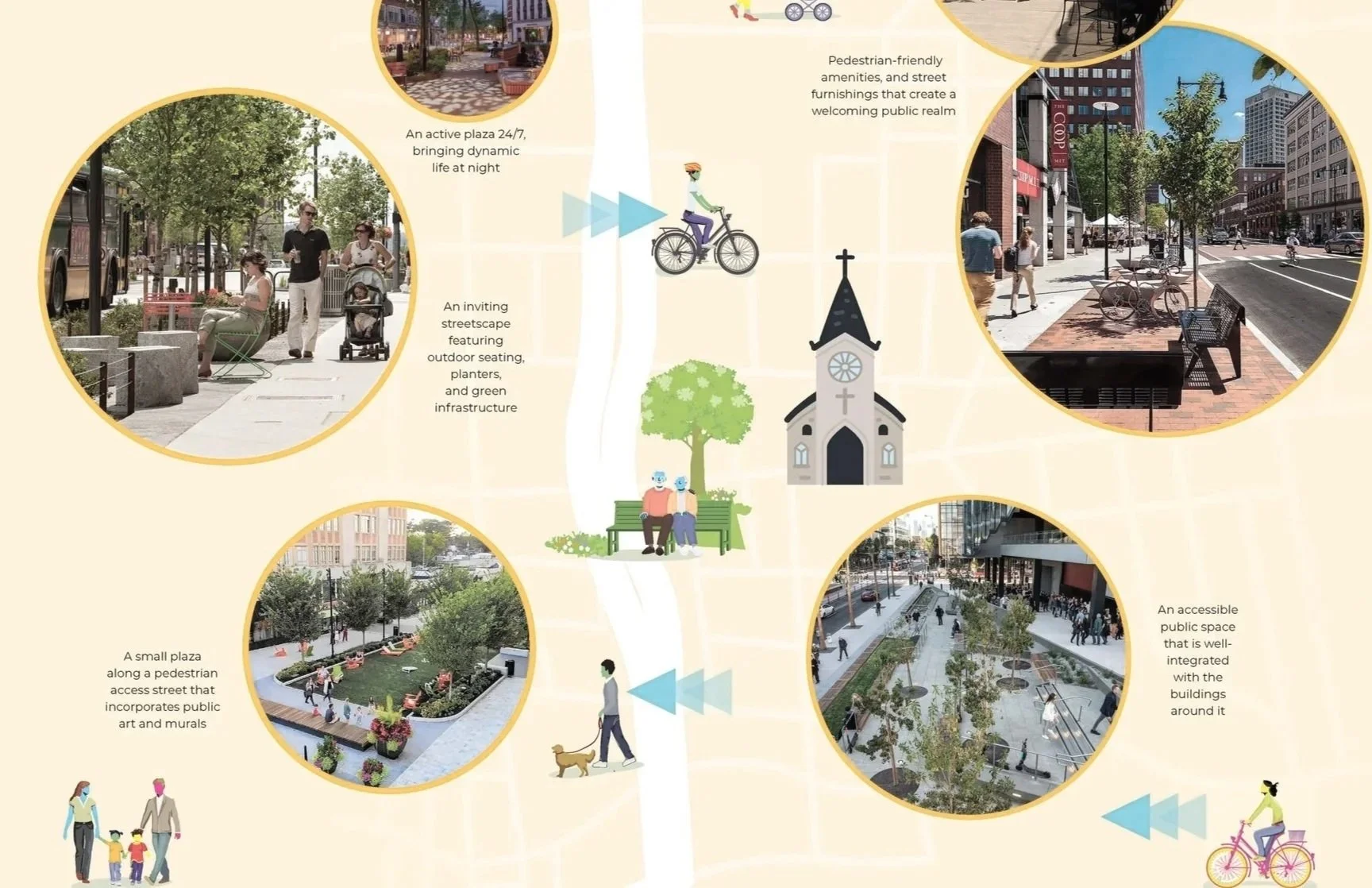
At the April open house and the June community design workshop, we heard feedback from hundreds of stakeholders about their ideas for Franklin Street. Over and over, these stakeholders focused on safety, multi-modal access, neighborhood connections, housing and active uses, place-making, and climate change mitigation and resilience.
These themes align directly with broader City of Portland direction around transportation and land use policy, including the City Council’s adoption of GPCOG’s Vision Zero Action Plan the City’s Complete Streets Policy, and ReCode Portland.
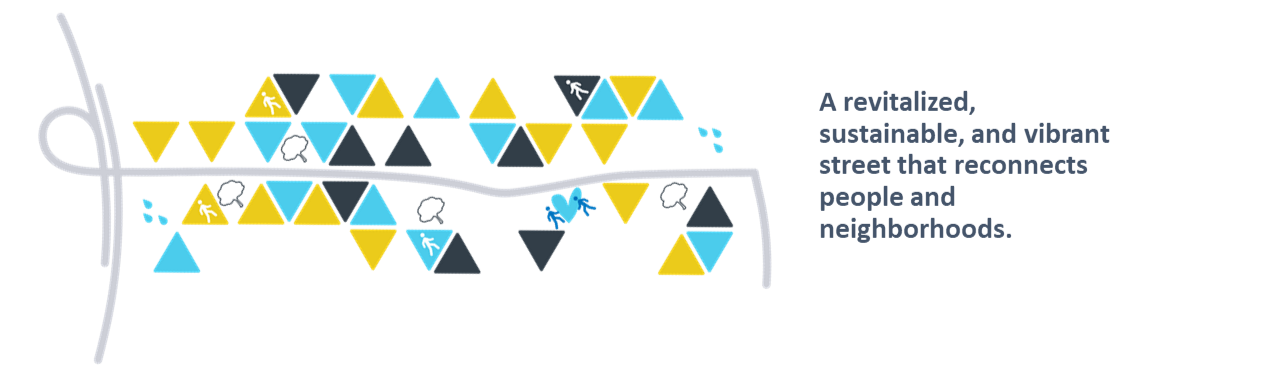
Vision
Goals + Objectives

Reconnect lost cross-streets to create comfortable, pedestrian-scale blocks
Integrate amenities and gathering spaces into the streetscape
Create a sense of place through distinct urban design and public realm character
Enlarge Lincoln Park and activate it through design and programming
Provide a 21st century gateway to the Portland peninsula
Improve wayfinding and navigation
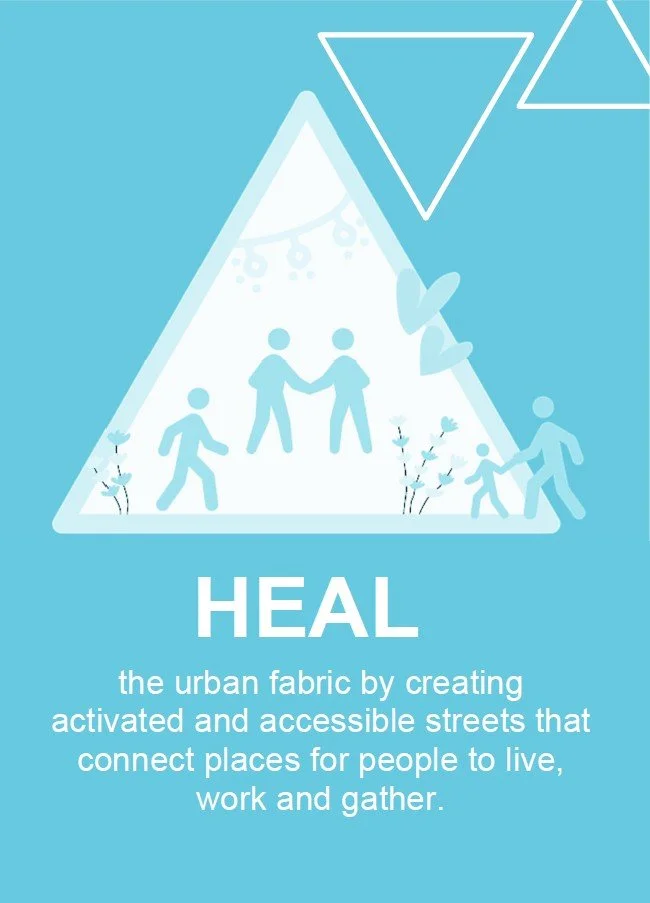
Provide safe, universal access and connection between surrounding neighborhoods, and to the broader City and regional destinations
Right-size vehicle roadway capacity to reflect varying traffic volumes and land use context along Franklin Street to improve safety and efficiency
Manage traffic speeds through street design and urban design
Expand active transportation infrastructure and opportunities including a high-quality pedestrian and bicycle network with increased connectivity along and across Franklin Street and transit-supportive infrastructure and expanded transit service
Promote public health by improving safety and experience for active transportation
Reduce single-occupancy vehicle trips and reduce the impact of through-traffic on adjacent neighborhoods
Enhance the livability and economic vitality of the Portland Peninsula
Create opportunities for mixed-use, mixed income housing, community resources and economic growth
Reduce urban heat island and improve air quality by enhancing green space and tree canopy
Reduce stormwater runoff and improve water quality through green infrastructure and an updated stormwater and sewer system
Address sea level rise and storm surge with climate resiliency-focused development standards and infrastructure